

Aubree Horton of the Atlanta Police Department, recognized as Investigator of the Year for his exemplary service to the community.
In a twist no one could have imagined, Atlanta’s Officer of the Year was fatally shot in an incident that has left a community stunned.
Investigator Aubree Horton, a celebrated member of the Atlanta Police Department known for his bravery and commitment to justice, met a shocking and tragic end.
The kicker?
Horton was shot not in the line of duty but after allegedly attempting to break into a home in Douglas County.
The shocking nature of this incident raises questions that no one saw coming: Was this decorated officer suffering from an undiagnosed mental health crisis?
Or were there darker forces at play? Here’s what we know.
A Shocking Morning: The Fatal Shooting of a Police Hero
On October 4, 2024, at around 5 a.m., the residents of Winston in Douglas County were jolted awake by an event that would dominate headlines.
A homeowner on Orkney Way, fearing for their safety, shot an intruder attempting to break into their home.
The intruder, as it turned out, was none other than Investigator Aubree Horton, a respected figure in the Atlanta Police Department’s Fugitive Unit.
Horton’s death shocked not only his department but the entire community.
Just a week earlier, he had been honored as Investigator of the Year at the prestigious Crime is Toast awards, a celebration of the city’s top officers.
How had this hero fallen so far, so fast?
Transitioning from this shocking incident, the focus now turns to the mystery behind Horton’s actions. What led this decorated officer to such a tragic fate?
From Award-Winning Officer to Intruder: What Happened?
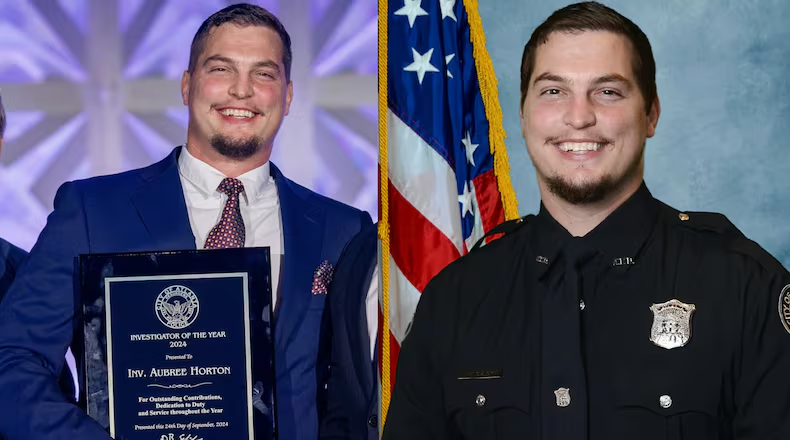
Horton’s life was the epitome of success. Having served with the Atlanta Police Department since 2015, he quickly climbed the ranks, known for his dedication and sharp investigative skills.
The Fugitive Unit he worked with regularly dealt with high-stakes cases, chasing down some of the city’s most dangerous criminals.
To many, Horton seemed invincible.
However, on that fateful morning, investigators described Horton as being either in the midst of a severe mental health crisis or under the influence of narcotics.
Surveillance footage from the home he tried to break into allegedly shows him acting erratically, a far cry from the composed and capable officer he had been known to be.
“When he gained entrance, the homeowner produced a firearm in self-defense and shot the individual,”
Capt. John Mauney said, according to Fox 5 Atlanta.
This tragic turn begs the question: Was Horton’s mental health unraveling long before the shooting? And if so, why wasn’t it noticed?
This question leads us into the complex and often hidden mental health struggles faced by law enforcement officers.
The Hidden Crisis in Law Enforcement: Mental Health or Drugs?
Law enforcement is not for the faint of heart. The intense pressure of the job, the long hours, and constant exposure to traumatic events can wear down even the strongest officers.
For Horton, a man celebrated for his bravery, could the burdens of the job have pushed him to his breaking point?
The Douglas County Sheriff’s Office has yet to confirm whether drugs were involved in the tragic events of October 4. However, they have strongly indicated that Horton was either experiencing a mental health crisis or under the influence of a substance.
This raises an uncomfortable but necessary question: Are we doing enough to support the mental well-being of our law enforcement officers?
Across the nation, stories like Horton’s are becoming all too common.
According to the National Alliance on Mental Illness, police officers are more likely to suffer from PTSD, depression, and anxiety compared to the general public.
Despite these alarming statistics, many officers hesitate to seek help due to the stigma surrounding mental health in the force.
For Horton, could seeking help have changed the outcome of that early morning in Winston?
As we explore these difficult questions, it is essential to acknowledge the impact this incident has had on the community.
The Community’s Shock: A Fallen Hero and Shattered Trust
Douglas County, known for its peaceful suburban life, is still reeling from the incident. The idea that a police officer—a figure of trust and safety—would be shot dead while allegedly breaking into a home is difficult for many residents to comprehend.
“He was our Officer of the Year. How does this happen?”
It wasn’t just the fact that Horton was a well-known public figure that shocked the community—it was also the manner of his death.
Horton lived just half a mile from the home where he was killed. The neighborhood had always considered itself safe, but now, many are left grappling with a sense of betrayal and confusion.
Yet amid the chaos, the question remains: Who was the real Aubree Horton? Was he a man burdened by invisible struggles, or was there more to this story than we know?
From Hero to Tragedy: How Will Aubree Horton Be Remembered?
As details continue to emerge, the narrative surrounding Aubree Horton is becoming increasingly complicated. In life, he was a hero; in death, he leaves behind a legacy marked by both honor and mystery.
His friends, colleagues, and community are left grappling with conflicting emotions: How could a man who dedicated his life to justice and protection become a victim of such a tragic downfall?
His legacy now hangs in the balance.
Will Horton be remembered for his years of service and dedication, or will his final actions overshadow all that he achieved?
The truth, as with many complex tragedies, likely lies somewhere in the middle.
A Call for Change: Mental Health Support for Law Enforcement
If nothing else, Horton’s story is a wake-up call. Law enforcement officers like him are often expected to be invincible, to carry the weight of the world on their shoulders without breaking.
But as this tragic case shows, even the strongest heroes can fall.
To prevent another tragedy like this, it is crucial for police departments to prioritize mental health support. Counseling, peer support programs, and regular mental health check-ins should be mandatory.
No officer should ever feel that seeking help is a sign of weakness.
Horton’s death, while shocking and tragic, could serve as the catalyst for real change. His story forces us to ask hard questions about the support systems in place for officers and how we can do better moving forward.
Conclusion: A Shocking Tragedy That Could Have Been Prevented
The death of Investigator Aubree Horton is a story filled with shock, heartbreak, and unanswered questions.
How does a man go from being Officer of the Year to being shot dead in the midst of a burglary? The answer may never be fully understood, but one thing is clear: mental health struggles in law enforcement cannot be ignored any longer.
As the investigation continues, let Horton’s tragic end be a reminder that even our heroes are human—and sometimes, they need saving too.
🩷Thank you for stopping by!🩷
Your support means the world to me. Be sure to explore more of my writings to elevate your mind, and check out my Pinterest for even more inspiration!You may also enjoy
🗣🗣Life can get tough for all of us, and it’s essential to take a moment to pause and reflect. If you’re looking for inspiration or self-care guidance, explore my empowering quotes and self-care guides here.
Disclaimer: This blog post is intended for informational purposes only. The content is based on previously reported events and should not be construed as professional advice. All facts and details have been sourced from reputable news articles to ensure accuracy.
About The Author

Discover more from Shaneatra Jones Speaks: The Inner Thoughts of A Modern Woman
Subscribe to get the latest posts sent to your email.


