

Indianapolis Family Massacre: A 17-Year-Old’s Fear of Beating Sparks Deadly Tragedy
On January 24, 2021, Indianapolis witnessed an unimaginable tragedy when 17-year-old Raymond Ronald Lee Childs III unleashed a brutal massacre, claiming six lives: his father, Raymond Childs Sr.; his stepmother, Kezzie Childs; two siblings, Rita and Elijah Childs; his brother’s girlfriend, Kiara Hawkins, who was nearly full-term pregnant; and her unborn baby boy.
At first glance, it seemed like a simple curfew dispute spiraled into chaos—Raymond’s desire to stay at his girlfriend’s house clashed with his father’s refusal.
However, as more details emerged, particularly from his sister’s testimony, it became clear that fear played a significant role.
She stated that Raymond feared a “beating” from his father for taking the family car without permission, the night before.
The early morning violence sent shockwaves through the community, igniting urgent conversations about youth violence, mental health issues, and fractured family dynamics.
Miraculously, Raymond’s younger brother, Xavier, survived the bloodbath, providing crucial testimony about that fateful night.
With sentencing looming in January 2025, the haunting details of the massacre continue to resonate, leaving Indianapolis to grapple with the devastating consequences of unchecked emotions and familial conflict.

Indianapolis Family Murders: The Grisly Discovery at the Childs Residence
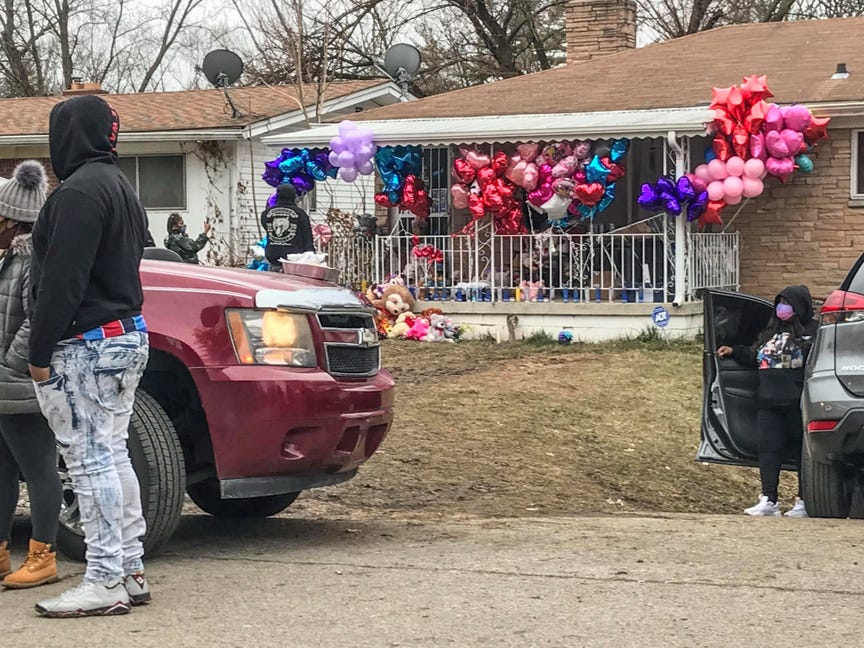
The tragedy unfolded in the Childs family residence located in the 3500 block of Adams Street, near East 34th Street and North Sherman Drive.
When authorities responded to reports of gunfire, they made a horrific discovery: six innocent lives had been slain in a brutal act of domestic violence.
- Kezzie Childs, 42, Raymond’s stepmother
- Raymond Childs Sr., 42, Raymond’s biological father
- Elijah Childs, 18, Raymond’s older brother
- Rita Childs, 13, Raymond’s younger sister
- Kiara Hawkins, 19, Elijah’s girlfriend who was seven months pregnant
- Baby Boy Hawkins, Kiara’s unborn son, who was later legally recognized as a victim
In a harrowing twist, only Xavier, Raymond Ronald Lee Childs III younger brother, survived the attack, managing to escape despite sustaining gunshot wounds to his leg and arm.
His courageous testimony became crucial in piecing together the night’s devastating events.
The Fatal Dispute: How a Family Curfew Led to Tragedy on Adams Street
Court records reveal a heartbreaking sequence of events sparked by a curfew dispute.
According to investigators, Raymond’s girlfriend reported that his father had called him to return home, which he did.
However, shortly after returning home, he went back to his girlfriend’s house, claiming that his father had kicked him out.
Approximately half an hour later, when his girlfriend received an alert about a shooting on Adams Street, where his family lived, Raymond feigned ignorance, acting as if he had no idea what had happened, despite the deadly deed already being done.
Related: Unmasking Mental Health Struggles in the Black Community
In the aftermath of the massacre, investigators focused on the eyewitness account of Xavier, just 15 years old, the younger brother who miraculously escaped the horror.
As homicide detectives worked diligently to piece together the tragic events that had unfolded in their home, Xavier’s testimony became crucial to the investigation.
Eyewitness Account: Xavier’s Testimony as the Sole Survivor of the Adams Street Shooting
As Xavier lay in his hospital bed, recovering from the traumatic events of that night, he recounted chilling details of the horror he had witnessed.
His brother, Raymond Ronald Lee Childs III, had gotten in trouble for leaving the house without permission, and their father had warned him of the consequences. What began as a family dispute quickly escalated into violence.
Raymond methodically confronted each family member. Xavier recalled the haunting moment, saying:
“I heard my dad pleading, ‘I’m sorry, Raymond, I love you,’ moments before he fired again.”
Gunshots echoed throughout the house, shattering the fragile peace.
Terrified, Xavier fled outside after hearing shots fired from upstairs.
Just as he escaped, he heard his sister scream, “He shot Elijah!”—a grim warning that marked the descent of Raymond as he came down the stairs, shooting their parents in cold blood.
Although, Xavier managed to escape outside, his brother chased him down, according to documents.
In a desperate plea for mercy, Xavier begged:
“I told him, ‘I can give you forty dollars, please don’t kill me,’ and he just looked at me and shot me in the leg. I fell, and then he shot me in my arm, too. He tried to shoot me in my head, but I guess he missed.”
When police arrived at the Adams Street home, they discovered the devastating aftermath: Raymond Ronald Lee Childs III had killed his father, Raymond Childs Sr.; his stepmother, Kezzie Childs; his brother, Elijah Childs; his sister, Rita Childs; and Elijah’s girlfriend, Kiara Hawkins, who was seven months pregnant.
Tragically, Kiara died later at the hospital, along with her unborn son.
Detectives worked tirelessly to piece together the tragedy and later arrested Raymond at a relative’s home, charging him as an adult for his heinous crimes.
The Legal Proceedings: Two Trials and a Guilty Verdict
Raymond Childs III faced two significant trials in his murder case, the first resulting in a mistrial and the second concluding with a swift conviction.
He was charged as an adult with serious offenses, including six counts of murder, one count of attempted murder, and one count of carrying a handgun without a license.
Mistrial in Raymond Childs’ First Trial
The first trial for Raymond Childs III ended in a mistrial due to dramatic courtroom events involving his cousin, Elanso Valez, who is the cousin of Raymond’s father, known as “Junior” by the family.
During his testimony for the prosecution, Valez dropped some heavy revelations.
He disclosed that Raymond had asked him to drive to Gary, Indianapolis to see his biological mother, but instead, they ended up at Valez’s house in Plainfield.
While there, they prayed for everyone involved in the killings to tell the truth. Can you imagine? This emotional moment led to Raymond breaking down, falling back on the bed, covering his eyes, and crying.
Valez also testified that he saw Raymond display the gun that prosecutors alleged was the murder weapon taken from the family home.
Emotions ran high in the courtroom as Valez recalled these events, directly asking Raymond Childs III, “Y’all remember that?”
This confrontation led both the defense and prosecution to quickly try to cut Valez off, but as the judge attempted to intercede, Valez boldly asked, “Why did you do it, Raymond?”
That moment of vulnerability really shook things up, prompting the judge to declare a mistrial after jurors admitted they were discussing Valez’s comments.
Key Testimonies and State of Mind
In addition to Valez’s emotional testimony, another crucial moment occurred during the trial.
Initially, details about Raymond’s fear of his father for taking the family car without permission the night before the incident were kept under wraps.
However, Raymond’s sister later stepped up and testified about his profound fear of their father, providing critical context regarding Raymond’s state of mind.
She directly testified that he feared a beating from his father for taking the family car without permission the night before.
Despite her heartfelt testimony, it ultimately didn’t sway the jurors to acquit him.
Conviction in the Second Trial
Fast forward to the second trial—this time, no dramatic outbursts from Valez, and the evidence against Raymond Childs was undeniably compelling.
As a result, he was convicted on all charges and is now waiting for sentencing on January 7, 2025, where he could face life in prison without parole.
The voices of the victims’ families continue to resonate in the courtroom as they seek justice, reflecting on the tragic events that unfolded over a curfew dispute.
Shaneatra Jones Speaks: The Heavy Burden of Tough Love—A Reflection on Raymond’s Tragedy
Unpacking the Complex Layers of Family, Fear, and Discipline Behind a Tragic Massacre
Alright, y’all, this is a lot to unpack.
Let’s take a moment to think deeply about what went down here because, as shocking as it is, there’s a bigger story behind these headlines.
Raymond Childs III took six lives in one tragic night—his biological father, his stepmother, two siblings, his brother’s girlfriend, and her unborn child.
We can’t ignore that, and we shouldn’t. But let’s ask ourselves, what were the moments, the experiences, the fears that built up to this point?
According to the probable cause affidavit, Raymond’s cousin, Elanso Valez, told detectives that he picked Raymond up after the murders.
Raymond handed over a gun at his cousin’s request, knowing he didn’t have a permit for it.

After they arrived at his cousin’s house, when his cousin said, “We need to find who did this,” Raymond reportedly broke down in tears.
Was that a moment of guilt? Was reality setting in, or was it a delayed reaction to the magnitude of what he’d just done? It’s hard to say.
Related: Adrian Cosby Lunges at Father After Court Conviction for Teen’s Murder Over Yeezys
But that moment—him breaking down—hints at something deeper, something human that the media didn’t really touch on.
Further, during the first trial, his sister testified that Raymond feared a ‘beating’ from his father for taking the family car without permission the night before.
It’s a powerful word—one that speaks to the intense environment he faced at home.
Yet, as I read through the court proceedings, probable cause documents, and media reports, I couldn’t ignore how the headlines often simplified the situation:
‘Teen murdered his own family of 6 for refusing to let him sleep over at girlfriend’s‘ or ‘Teen kills over curfew.’
These narratives are sensational and easy to sell, but they ignore what his sister’s testimony revealed.
This isn’t about excusing his actions but about recognizing the effects of extreme punishment on a young mind. When fear and harsh discipline are at the center of a household, what does that leave behind?
Raymond’s story highlights a more complex reality, challenging us to look beyond the headlines.
In the Black community, “tough love” is often the go-to approach, a shield to prepare our kids for a world that doesn’t give them the same chances.
But we have to face the reality that sometimes that approach crosses a line, leaving scars that can’t be seen until they’re too deep to fix.
For so long, we’ve been taught that discipline rooted in fear is a sign of strength, but is it really building resilience—or is it planting seeds of anger, resentment, and desperation?
Studies show that this kind of discipline, especially when it turns physical, can lead to increased aggression, mental health challenges, and emotional turmoil that never truly heals.
We can’t ignore the bigger pattern here about domestic violence in Black communities.
This isn’t the first tragic massacre rooted in a family dispute within the Black community. Remember Jesse Dotson’s case?
A family conflict spiraled into a bloodbath that claimed six lives, and it was his 11-year-old nephew who identified him from a hospital bed. The similarities here are chilling.
Cases like these reveal a painful truth about how domestic violence can fracture Black families, breaking down trust and leaving emotional scars that may never heal.
We see these family disputes escalate to horrific levels, and it’s time to recognize the patterns and address the underlying issues leading to such devastating outcomes.
If we’re going to talk about this tragedy honestly, we have to acknowledge these uncomfortable truths.
And for all of us, it’s a call to action. Let’s move beyond the headlines, beyond the sensational soundbites, and ask ourselves how we can break this cycle.
Generational trauma is real, and it’s time we find new ways to guide, to discipline, and to love—ways that don’t rely on fear but on respect and understanding.
For anyone who wants to understand this issue deeper, here are some key resources:
- American Psychological Association: The impacts of corporal punishment on children
- The Black Wall Street Times: Examining cultural roots of discipline in Black communities
- The Atlantic: Long-term effects of fear-based discipline on child development
Let’s honor the lives lost by making sure this conversation doesn’t end here.
For the sake of future generations, we need to break these cycles and find ways to build healthier, stronger families rooted in love, respect, and guidance—because we all deserve more than to live in fear.
Thank You For Your Support!
We appreciate you stopping by and hope you take some time to explore our website. Your support means the world to us and keeps us thriving. Please bear with us as we work to improve our site’s speed and enhance your experience. We’re excited to bring you top-quality content as we continue to grow!
Please Explore More Categories
- Celebrity News
- Family Matters
- For The Culture
- Mind & Soul
- Modern Womanhood
- Money Moves
- Ripped From The Headlines
- Trending Topics
About The Author

Discover more from Shaneatra Jones Speaks: The Inner Thoughts of A Modern Woman
Subscribe to get the latest posts sent to your email.


