

This is a truly heartbreaking story.
When I came across the case of Tamica Gant Lawrence, I knew I had to cover it. It’s not just the tragedy of her death—it’s the fact that she was doing everything in her power to protect herself.
Tamica took all the right steps to prevent this from happening, but her ex-boyfriend was determined to end her life. And this isn’t just Tamica’s story. It’s part of a much bigger issue we’re seeing more and more of: women being murdered by the person they once loved and trusted.
This story highlights the reality that despite all the protection orders, the system still leaves women vulnerable, and we have to talk about it.
The Tragic Murder of Tamica Gant Lawrence
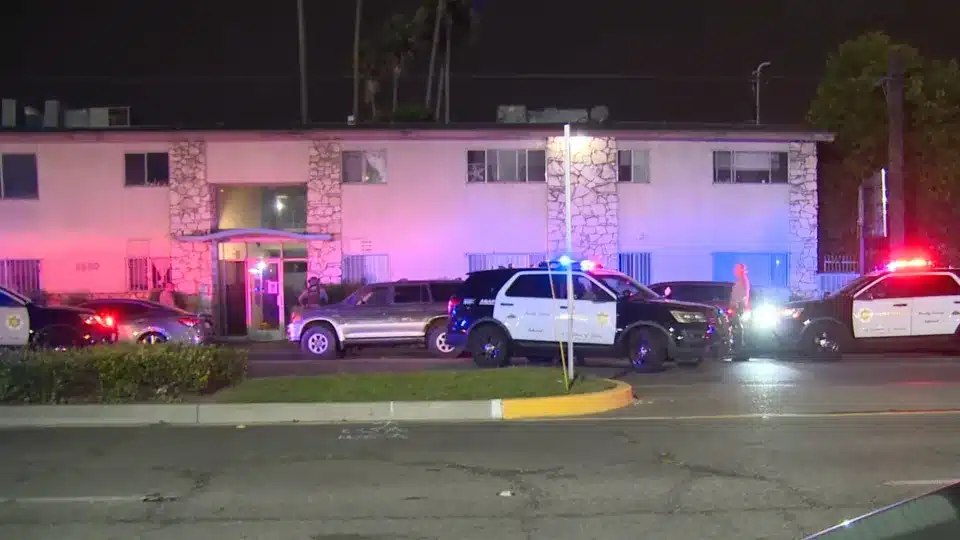
In a heart-wrenching tragedy, Tamica Gant Lawrence, a 54-year-old woman from Bellflower, California, was murdered by her ex-boyfriend, Anthony Davidson, just hours after obtaining a restraining order against him.
The incident, which also left her 26-year-old son wounded, underscores the harsh reality that a restraining order alone cannot always protect victims of domestic violence.
Restraining Order Filed Too Late to Prevent Murder-Suicide
Earlier that day, Tamica had taken a brave step in seeking legal protection, filing a restraining order against Davidson at the Whittier Courthouse. She planned to deliver the order to the Lakewood Sheriff’s Station to begin the enforcement process.
However, before she could make it there, Davidson acted.
Lt. Hugo Reynaga of the Los Angeles County Sheriff’s Department commented on the situation:
Reynaga said restraining orders are “only as good as they can be” and “it’s a piece of paper.”
While they serve as a critical legal tool, they rely on abusers adhering to the law and law enforcement having the opportunity to enforce them. According to USA Today, Lt. Reynaga stated when people take out restraining orders, the court will grant the order but will also ask them to take a copy of the restraining order to their local law enforcement agency.
Murder-Suicide in Bellflower: A Night of Terror
That same evening, Davidson forcibly entered Tamica’s apartment, shattering the front door, and went on a deadly rampage.
Related: Unmasking Mental Health Struggles in the Black Community
The attack began with him shooting Tamica’s son, Darnell Lawrence, in the hip. Darnell managed to escape the apartment despite his injuries. As he fled, Davidson turned his attention to Tamica.
When deputies arrived at the apartment near Lakewood and Artesia Boulevards around 11:30 p.m., they found Darnell wounded and rushed him to the hospital.
As officers were on the scene, another gunshot echoed from inside the apartment. Davidson had turned the gun on himself, committing suicide after killing Tamica.
Lt. Reynaga described the horrific events:
“The victim stated he heard the door like it was kicked in, and sure enough, the door jam is split. The suspect did kick the door in, made his way to the son’s bedroom first, opened the door on him, fired at him, then turned around and went into the mother’s bedroom.”
History of Domestic Abuse: Restraining Orders Not Enough
This tragic incident was the culmination of a long history of domestic violence.
Since 2021, law enforcement has responded to 16 calls to Tamica’s residence, with seven calls made in the past few months alone.
Despite repeated interactions with law enforcement and her attempts to break free from the abusive relationship, the violence continued to escalate.
The Limitations of Restraining Orders in Preventing Domestic Violence
Lt. Reynaga’s chilling statement, “Restraining orders are only as good as they can be… It’s a piece of paper,” reflects the cold truth in cases like Tamica’s.
While a restraining order can legally bind an abuser to stay away, it cannot physically stop them from acting violently if they are determined.
In Tamica’s case, her decision to seek protection was met with a devastating attack before law enforcement could intervene.
This case highlights the vulnerability that many domestic violence victims continue to face, even after taking the necessary legal steps to protect themselves.
It forces us to ask a critical question: how effective can restraining orders be in cases where the abuser is unwilling to comply?
When Restraining Orders Aren’t Enough: The Need for Better Protection Against Domestic Violence
While restraining orders are often seen as a necessary legal tool for protecting victims of domestic violence, there are other tragic cases such as Cindy Bischof and Tiana Notice that reveal how these orders fail.
Research shows that restraining orders are effective in only about 70% of cases. Diane Rosenfeld, a Harvard Law lecturer and expert on domestic violence, emphasizes the critical gap in protection. She points out:
“Restraining orders are effective in about 70 percent of cases, but when they don’t work, it can be deadly.”
This statistic sheds light on the alarming reality that many victims of domestic violence remain vulnerable even after obtaining a restraining order.
The challenge is that when restraining orders fail, the results can be catastrophic. Violations, no matter how small, can escalate into severe violence, including homicide.
“Even if it’s a phone call, even if after the order of protection, he sends her flowers, because he’s just testing the system to see if there will be any consequences, it will continue to escalate.”
This is why authorities must respond immediately to every violation, no matter how insignificant it may seem.
One of the more effective measures suggested by experts to prevent this kind of escalation is GPS monitoring. Rosenfeld advocates for this proactive approach, saying:
“We need better methods of containment, including GPS monitoring, to enforce orders of protection.”
Several states have already started employing this technology, using ankle bracelets that track offenders 24/7. If the offender approaches the victim or enters a restricted zone, law enforcement is immediately notified.
This kind of monitoring has proven highly effective in preventing domestic violence homicides, with one program reporting a 100% success rate in keeping offenders away from victims.
States like Massachusetts are leading the charge, employing GPS monitoring for offenders who violate restraining orders.
Deputy Commissioner Paul Lucci of the Massachusetts Probation Office has shared that this system has effectively protected victims from harm, citing that they have not experienced a domestic violence homicide in the areas where high-risk teams are in place.
Unfortunately, while technology can play a significant role in keeping victims safe, it’s clear that law enforcement and the criminal justice system must remain vigilant.
As Rosenfeld reminds us, “Homicides can be predicted and prevented.” It’s time to take stronger action to protect those at risk and to ensure that restraining orders have real consequences for those who violate them.
Strengthening Protection for Victims of Domestic Violence
Tamica’s tragic death serves as a stark reminder of the limitations of the current system. While restraining orders are important, they are not enough on their own to guarantee safety.
Victims like Tamica need access to more comprehensive safety measures, including emergency shelters, enhanced law enforcement responses, and more community support.
The grim reality is that restraining orders are only part of the solution. True protection requires a multi-layered approach that includes safety planning, immediate intervention, and more robust resources to ensure that victims can live free from fear and harm.
Shaneatra Jones Speaks: Empowering Women to Protect Themselves from Domestic Violence
Ladies, do not let the sheriff’s words escape your mind if you’re ever in this situation. His words couldn’t be clearer: a restraining order is nothing more than a piece of paper.
You have got to protect yourself because no one knows your reality better than you. We can’t blame Tamica—she was taking the right steps—but were there signs that maybe told her she should completely move, disappear, and start fresh?
It’s unfortunate, but sometimes the only way out is to move and assume a new identity. The law couldn’t protect her, and her son was shot as well. Luckily, he’s alive, but this tragedy is another reminder that the system doesn’t always shield us from harm.
I’ve covered cases like Tamica Huston’s, where the patterns of domestic violence are clear, and the same goes for Mary Collins, whose love turned deadly in the name of revenge.
Wow, the irony of covering two cases, both involving Black women named Tamica, murdered at the hands of their lovers. It’s profoundly heartbreaking how these tragedies reflect the deadly consequences of domestic violence in our community.
We must stay alert and understand that the law alone cannot always protect us. Legally, prepare yourself, even if that means arming yourself.
Remember Jennifer Lopez in Enough? That movie speaks volumes about the lengths we sometimes have to go as women.
Stay vigilant and empowered, because your safety comes first.
Thank you for stopping by!
Your support means the world to me. Be sure to explore more of my writings to elevate your mind, and check out my Pinterest for even more inspiration! You can check out more stories here.
Explore Our Categories for More Intriguing Stories and Updates:
- Celebrity News
- Family Matters
- For The Culture
- Mind & Soul
- Modern Womanhood
- Money Moves
- Ripped From The Headlines
- Trending Topics
About The Author

Discover more from Shaneatra Jones Speaks: The Inner Thoughts of A Modern Woman
Subscribe to get the latest posts sent to your email.


